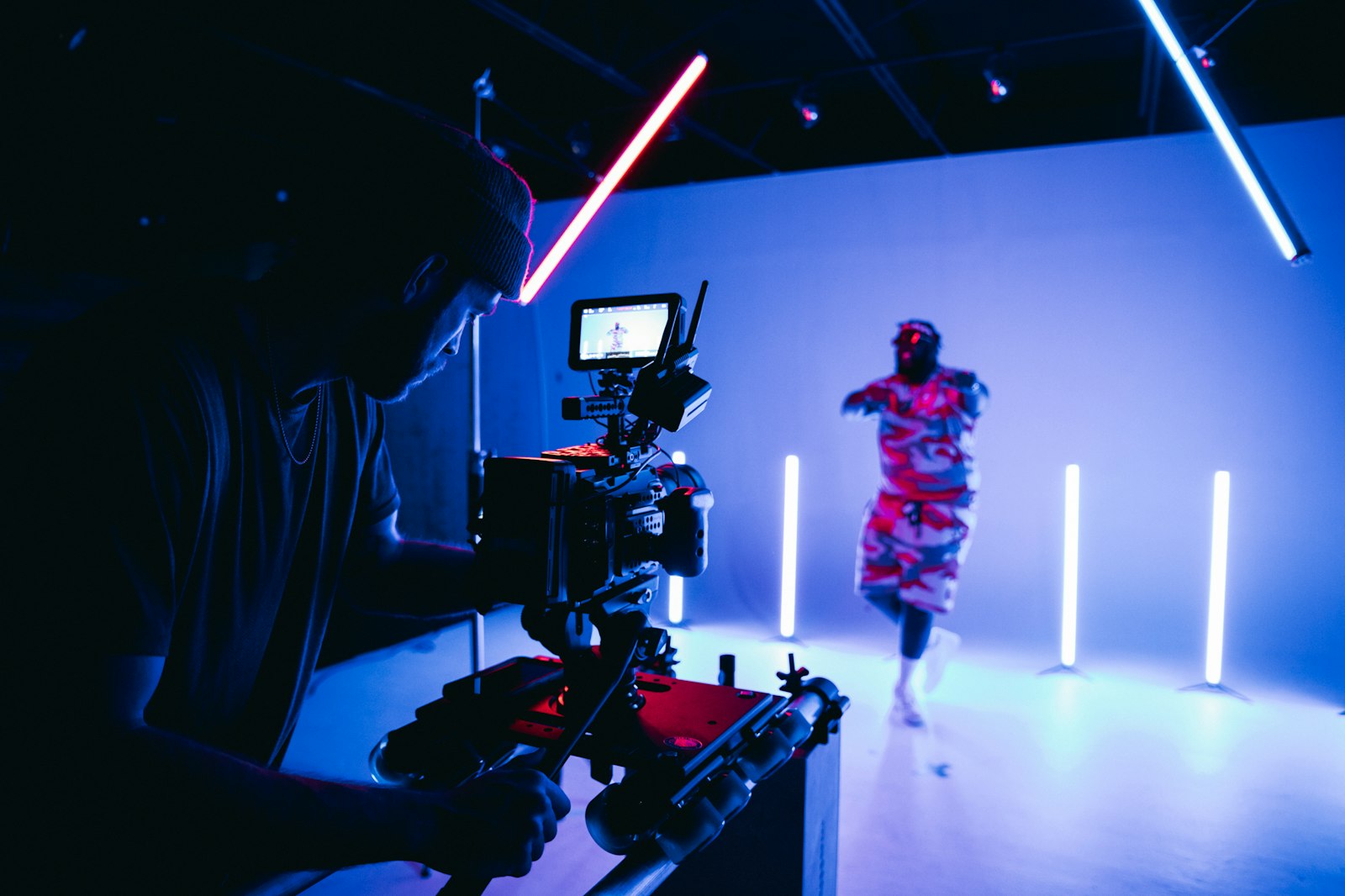

Three years ago, a high-quality video ad took four to six weeks from brief to delivery. Today, with AI integrated at the right points in the workflow, the same quality of output can be achieved in four to six days. That's not an incremental improvement, it's a structural change in what production can deliver, at what speed, and at what cost.
But the story of AI in video production is more nuanced than 'AI makes things faster.' The most sophisticated brands and production companies aren't using AI to replace their creative teams. They're using it to multiply them, eliminating the bottlenecks that used to constrain what was possible within a given budget.
Where AI Is Actually Being Used Today
The areas where AI is delivering the most tangible impact in commercial production are: script and concept development, storyboarding and visual pre-viz, voice-over generation, music composition, post-production editing (especially rough cuts), and ad variant creation for A/B testing. Each of these was previously a time-intensive, human-only domain. AI hasn't replaced the human judgment in any of them, but it has dramatically reduced the mechanical effort.
Pre-Production: Concept to Screen Faster
Pre-production has historically been the longest phase of any campaign, the time between receiving a brief and calling 'action.' Concepting, scripting, client approvals, location scouting, storyboarding, mood boarding. Each handoff introduced delay. AI has compressed several of these stages simultaneously.
Large language models can now produce shooting scripts from creative briefs in minutes, not as a replacement for creative directors, but as a rapid starting point that eliminates blank-page paralysis. Image generation tools produce storyboard frames and mood board references that previously required a dedicated illustrator. The practical result: clients arrive at the shoot with a much clearer shared vision, reducing costly on-set decision-making.
Production: AI as a Creative Safety Net
On set, AI's role is more subtle but increasingly valuable. Real-time transcription tools flag misread lines immediately. AI-assisted monitors analyse framing and focus in real time, catching issues before they become costly re-shoots. Some productions are using AI to generate 'coverage', alternate angles or reaction shots synthesised from existing footage, reducing the number of set-ups needed per day.
AI Impact Across Production Stages (% of teams reporting significant time savings)
Post-Production: Where AI Has the Biggest Current Impact
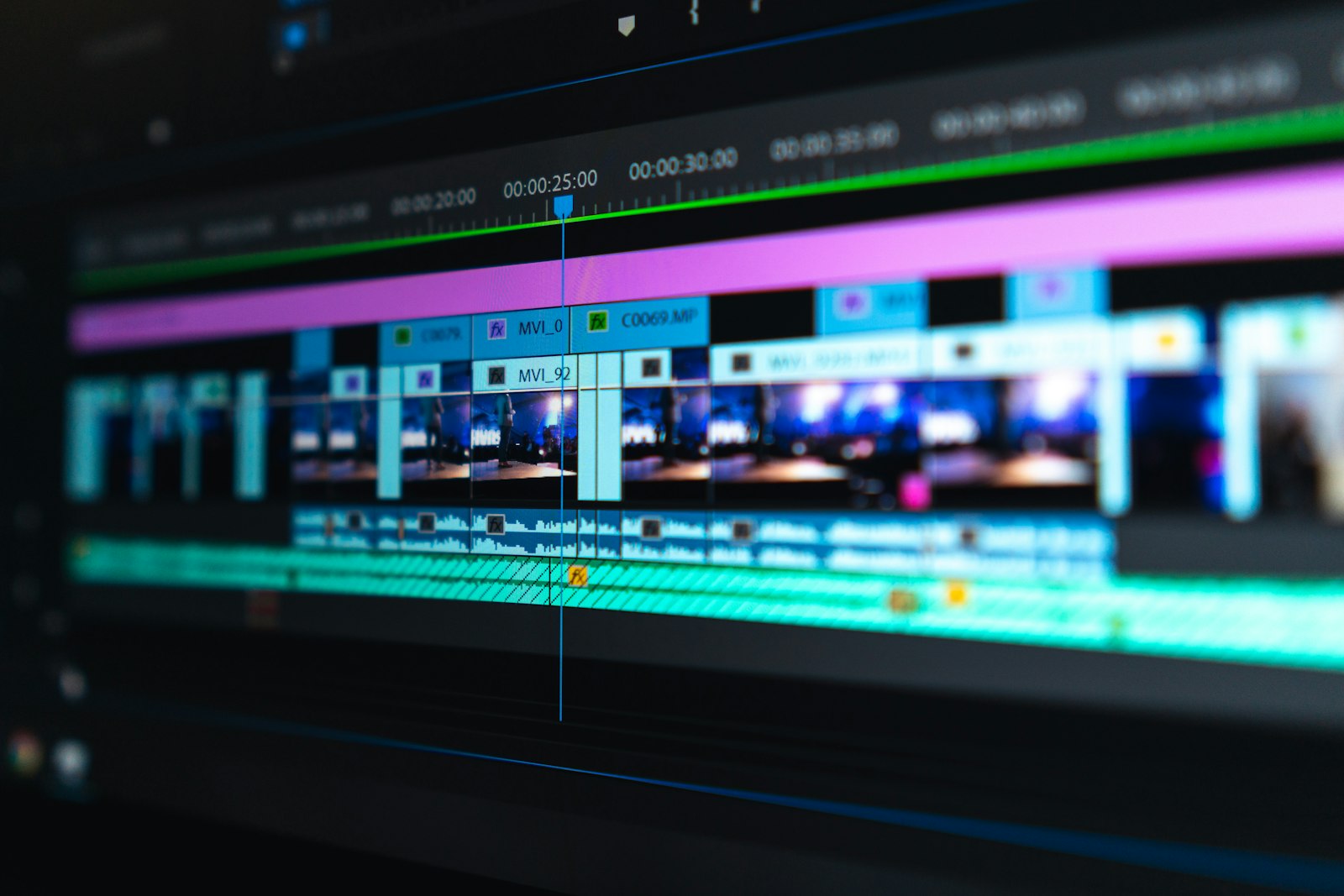
Post-production is where AI integration is most mature and most immediately impactful. Automated rough cut generation, where AI assembles the first edit from tagged footage, saves editors 60-70% of the time they used to spend on assembly. Colour grading tools powered by AI can match an entire edit to a reference look in minutes. AI audio tools handle background noise removal, dialogue enhancement, and even mouth movement synchronisation for dubbed content.
Perhaps most importantly for paid media campaigns, AI makes ad variant creation genuinely scalable. A hero edit that would have produced 2-3 variants manually can now yield 20-30 platform-optimised cuts, different aspect ratios, different hooks, different CTAs, without a proportional increase in edit time. This matters enormously when you're running multi-platform campaigns and need 9:16 for TikTok, 1:1 for Instagram feed, and 16:9 for YouTube, all from the same source footage.
Scaling variants this fast raises its own challenge: keeping every cut on-brand and visually consistent. Tools like invideo agent are designed for this kind of workflow, acting as a creative collaborator that carries project context, characters, and visual direction through an entire production, so each variant stays aligned with the original creative intent instead of drifting apart.
The Human Element: What AI Cannot Replace
Human vs AI in Video Production
AI Excels At
- Speed & iteration
- Variant generation
- Pattern matching
- Mechanical editing
- Voice/music synthesis
Humans Excel At
- Emotional resonance
- Cultural nuance
- Brand voice
- Strategic insight
- Directorial vision
Best Together
- Concept development
- Script writing
- Storyboarding
- Rough cuts
- Campaign variants
The most important thing to understand about AI in production is what it cannot do. AI cannot tell you whether a piece of creative will emotionally land with a specific audience. It cannot understand the cultural subtext of a joke. It cannot make the call to throw out the script on the day because something better happened spontaneously. It cannot be the creative director who sees two disparate images and knows they belong together.
"AI gives us the ability to explore more creative territory. But the territory still has to be worth exploring. That's still a human decision."
- Holly Films Production Team
What Brands Should Do Now
- Ask your production partner how AI tools are integrated into their pre-production workflow, if the answer is 'they're not,' that's a red flag in 2025
- Request that your next campaign includes AI-assisted variant creation as a deliverable, you should receive platform-specific edits as standard
- Don't accept a 6-week production timeline without understanding why, AI-integrated workflows should be faster
- Invest in talent that understands both craft and technology, the best creative directors in 2025 are the ones who know when to use AI and when to put it aside
- Use AI-generated rough cuts as a client approval tool earlier in the process, reducing late-stage revision rounds
The shift has already happened
AI hasn't disrupted video production, it has already transformed it. The question for brands isn't whether to engage with AI-powered production. It's whether your current production partner is using AI effectively, and whether the time and cost savings are being passed back to you in the form of more output, faster delivery, and smarter campaigns.