

Every week, a new headline announces either that AI is about to replace creative departments entirely or that AI-generated advertising is a gimmick that no serious brand would touch. Both positions miss what's actually happening in practice. The most sophisticated advertisers in 2025 are using AI as a creative multiplier, expanding what their teams can produce without replacing the human judgment that gives the output its value.
The reality is more specific and more interesting than the debate suggests. AI is being deployed in distinct, defined ways across the creative production pipeline, each with different levels of maturity, different levels of human oversight, and different commercial outcomes. Understanding which use cases are delivering real returns, and which are still experimental, is essential for any brand considering how to integrate AI into their creative workflow.
The Use Cases That Are Generating Real Returns
Use Case 1: Ad Variant Generation at Scale
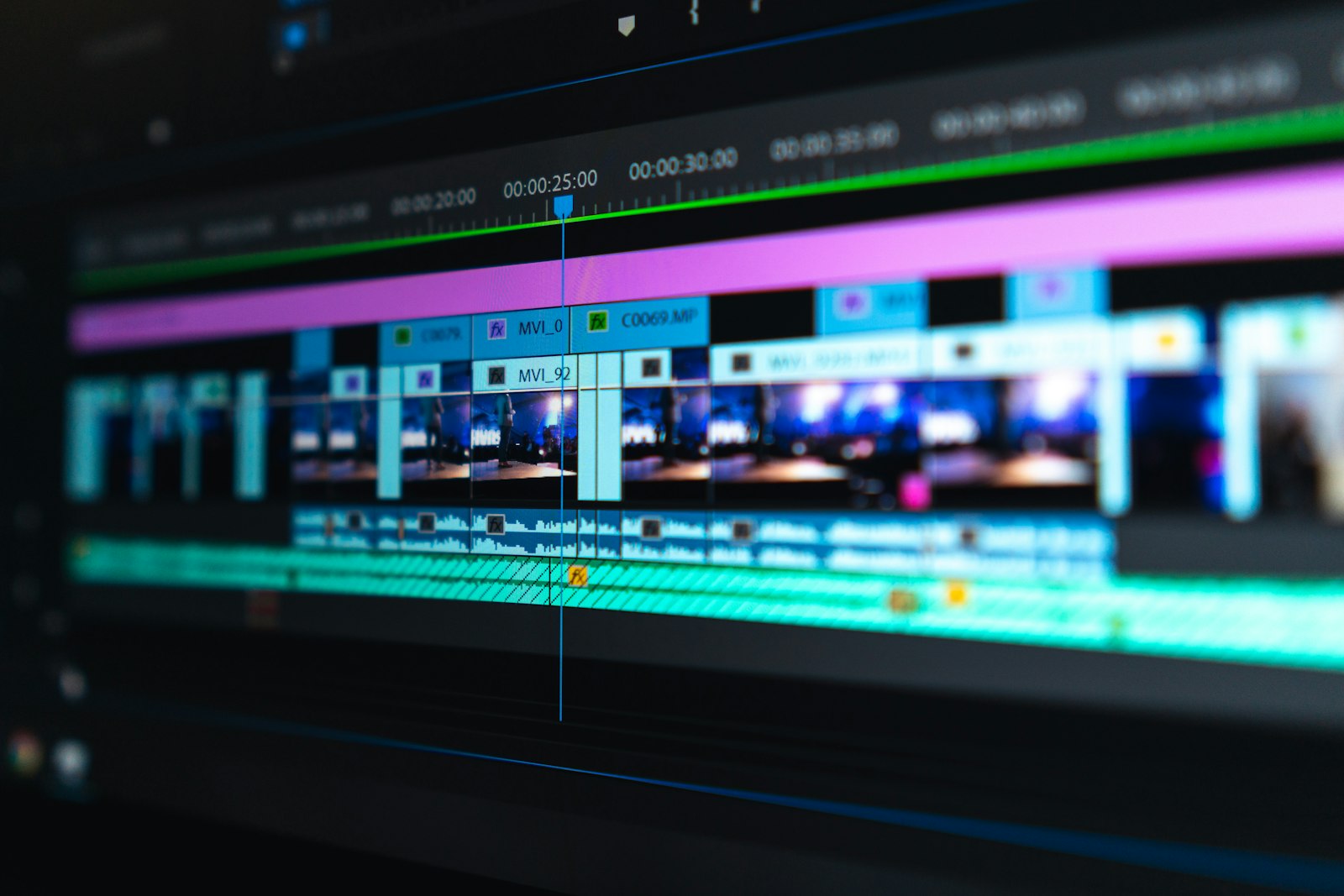
This is the highest-ROI AI application in commercial advertising right now. A brand shoots one hero creative asset and uses AI tools to generate dozens of variants: different opening hooks, different aspect ratios for different platforms, different closing CTAs for different audience segments, different background music styles. What used to require a separate edit session for each variant now happens in minutes.
The commercial advantage is significant. Testing more creative variants means finding the best-performing creative faster and at lower cost. A campaign that tests 20 variants will consistently outperform a campaign that runs 3 variants, because it has a larger creative search space, and AI makes producing those 20 variants economically viable in a way that manual production never could.
Use Case 2: AI-Assisted Concept Development
Large language models have become standard tools in the creative concepting phase at most forward-thinking agencies. Not because they generate finished campaign concepts, they rarely do, but because they are extraordinarily useful for rapid ideation, angle exploration, and breaking creative teams out of category thinking patterns.
A creative brief run through a well-prompted LLM might yield 40 angle approaches in 10 minutes. The creative director then identifies the 3 worth developing further. The LLM didn't develop the concept, it expanded the search space. This is the most honest description of AI's role in creative concepting: it's a very fast, very prolific brainstorming partner that requires a skilled human to edit its output.
Use Case 3: Synthetic Voice and Music
AI voice-over generation has reached a quality level that is genuinely competitive with human voice talent for many applications, particularly for digital ads, explainer videos, and platform-specific content where a broadcast-quality VO artist is unnecessary. The cost difference is significant: AI VO at scale costs a fraction of human talent, and revisions take seconds rather than scheduling a new session.
AI music generation is following a similar trajectory. Tools like Suno and Udio can now produce platform-appropriate background tracks in seconds from a descriptive prompt. For the hundreds of ad variants that need background music, AI music eliminates both the licensing complexity and the cost of original composition.
AI Creative Tools Adoption Rate by Function (2025)
Where AI Is Not Yet Ready for Prime Time
The use cases above are delivering returns in production environments today. Other AI applications are at an earlier stage. Fully AI-generated hero video creative, the kind that a brand would run as its primary paid media asset, is not yet at a quality level that most brand standards can accept. Consistency issues, uncanny valley character movement, and an inability to capture genuine human emotion mean that AI video generation remains a tool for exploration and rough pre-viz, not final delivery.
The Ethical and Brand Safety Considerations
Responsible AI creative deployment requires explicit policies around disclosure, consent, and brand safety. If your brand is using AI-generated voice or likeness, disclosure obligations vary by jurisdiction and platform. Consent from anyone whose voice or image is used to train or reference a model is increasingly a legal requirement. And any brand using AI for ideation should have a clear audit trail for intellectual property, training data sourcing is an active legal battleground.
AI Creative Deployment Framework
High ROI Now
- Variant generation
- Script ideation
- AI VO
- Music generation
- Rough cuts
Emerging
- Character consistency
- Scene generation
- Full AI ads
- Real-time personalisation
Governance
- Disclosure policy
- IP audit trail
- Consent frameworks
- Brand safety review
Team Structure
- AI tool literacy
- Human oversight
- Creative direction
- Quality control
"The creative teams thriving in this environment aren't asking 'will AI replace us?' They're asking 'what can we build with AI that we couldn't build before?' That's a much more interesting question."
- Head of Creative Technology, Holly Films
How to Start: A Practical Integration Path
- Begin with AI in post-production variant creation, lowest risk, highest immediate ROI, requires no change to your shoot process
- Introduce AI concepting tools in your brief-to-concept phase and measure whether your first-round creative is stronger
- Pilot AI voice-over for digital-only assets before committing to it for broadcast or premium placements
- Build an internal policy on AI disclosure before you need it, the regulatory landscape is moving fast
- Invest in AI tool literacy for your creative team rather than building a separate 'AI team', integration is the goal
- Measure the creative output per campaign and per pound spent, that's the metric that tells you whether AI is working
The real competitive advantage
Brands that are winning with AI aren't doing it because they have better technology than their competitors. They're winning because they have creative teams who understand both craft and technology well enough to use AI at the right moment and step back from it at the right moment. That combination is genuinely rare, and genuinely valuable.