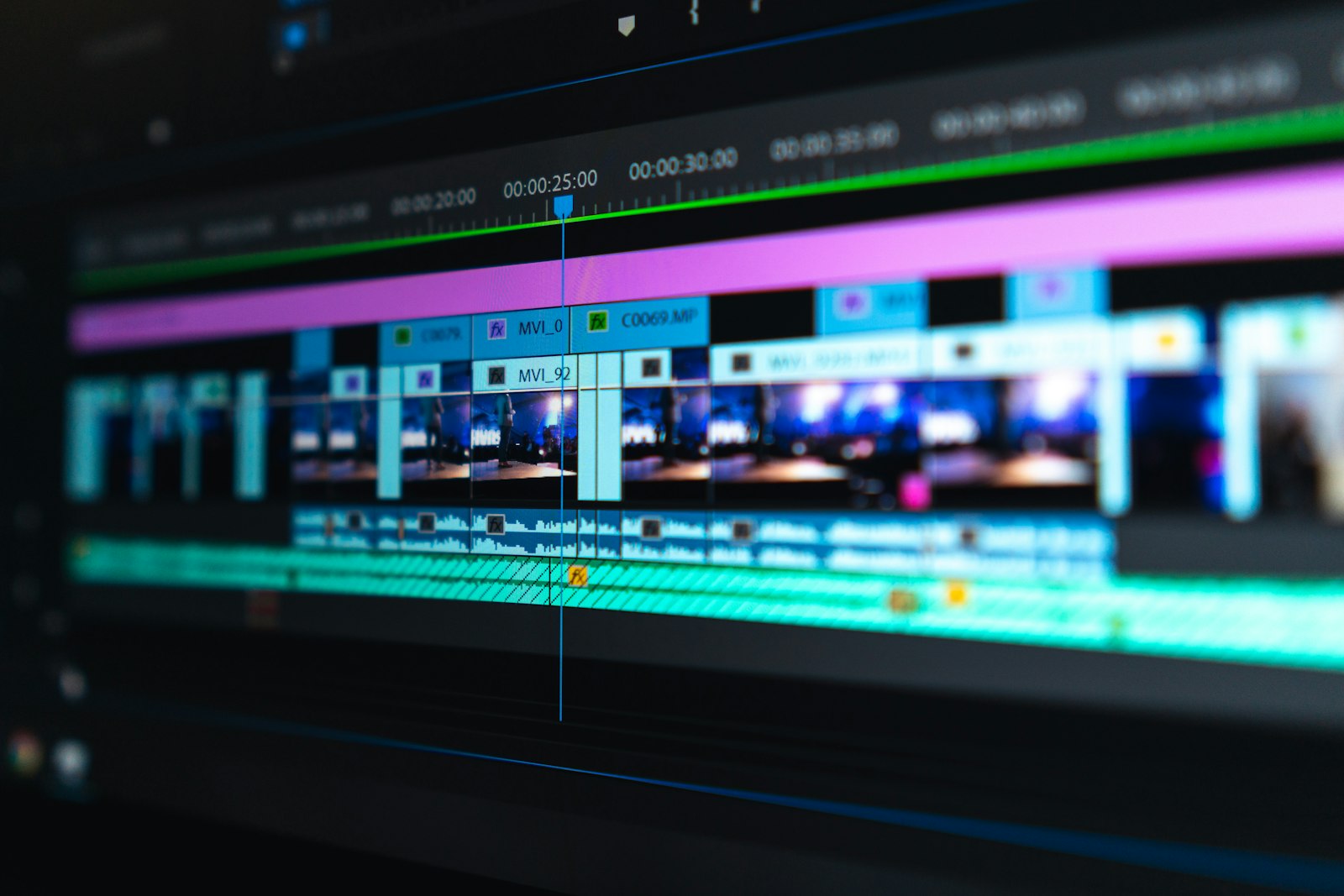

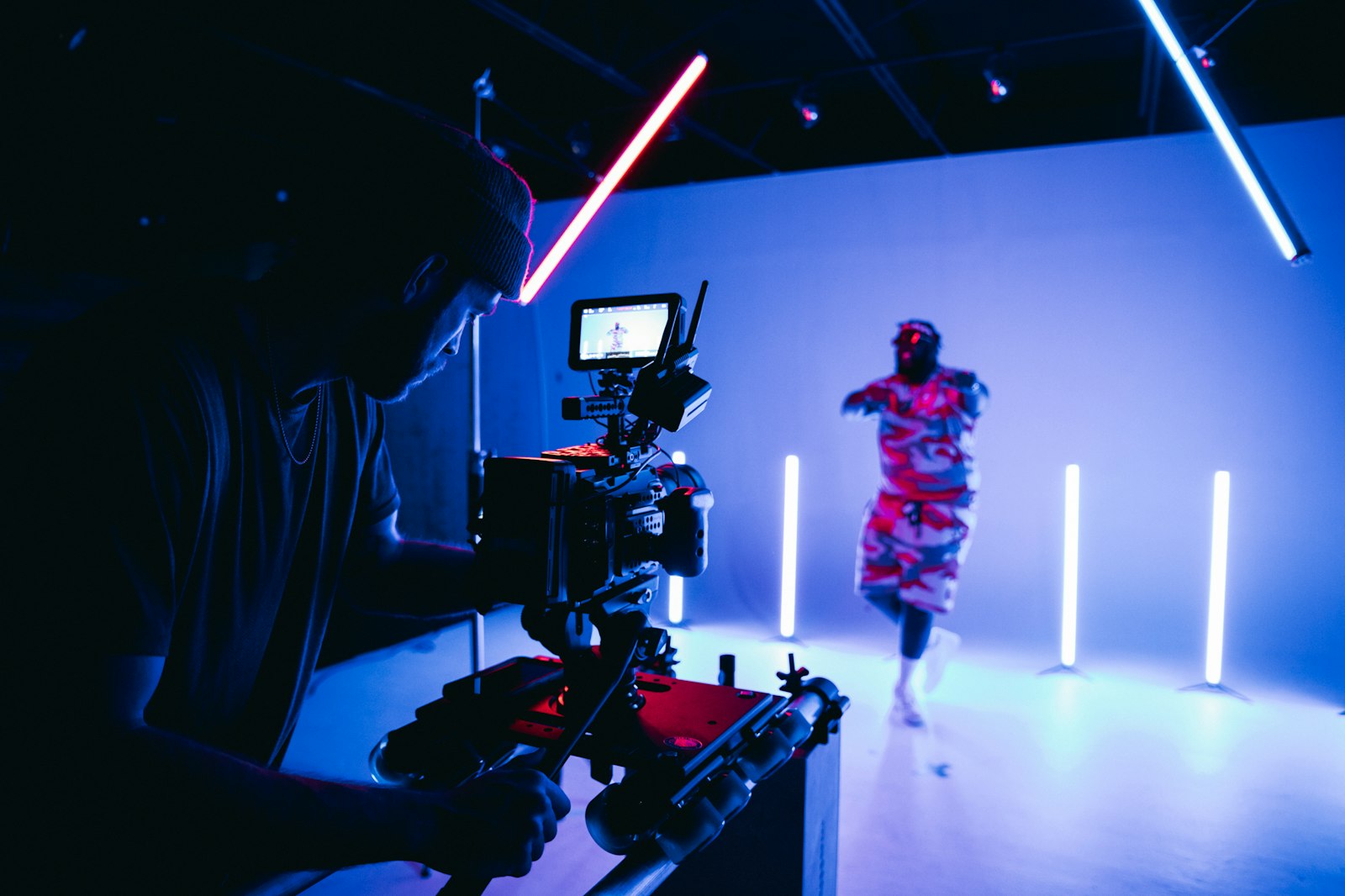
Something significant happened to the advertising industry between mid-2025 and mid-2026: US search interest in AI commercial production grew nearly 5x, making it the fastest-growing commercial video keyword in Google Trends. Brands are no longer asking whether AI belongs in commercial production. They are actively searching for an AI video production company that can deliver broadcast-quality commercials in days instead of months. This guide explains what AI commercial production actually involves, what it costs, where it outperforms traditional production, and how to choose the right partner for it.
What Is AI Commercial Production?
AI commercial production is the process of creating professional video commercials — TV spots, digital video ads, brand films, and social commercials — using generative AI at every stage of the production pipeline. That includes AI-assisted concept development and scriptwriting, AI storyboarding and previsualisation, generative video and image models for scenes that would traditionally require location shoots or CGI studios, AI voiceover and sound design, and AI-accelerated editing and finishing. The output is indistinguishable from a traditionally produced commercial. The process behind it is 5-10x faster and a fraction of the cost.
The distinction that matters: AI commercial production is not the same as typing a prompt into a text-to-video tool and publishing the result. Production-grade AI commercials still require creative direction, brand strategy, cinematography knowledge, colour science, and rigorous quality control. That is why brands hire an AI video production company rather than attempting it in-house. The tools are accessible, but the craft is not.
This is exactly the gap AI collaborators like invideo agent are designed to help close: rather than treating each generation as a disconnected prompt, it helps teams carry creative direction, characters, and visual consistency across an entire production, so the craft stays intact even as the tooling accelerates.
Why AI Commercial Production Is Exploding in 2026
The Google Trends data tells a clear story. Searches for AI commercial production inflected sharply in March 2026 — the moment the latest generation of video models made photorealistic, brand-safe output reliably achievable — and have held at that elevated level ever since. This is not a spike; it is a step change. Over the same window, searches for ads agency and AI advertising agency hit their 12-month peaks in June 2026. Demand for AI-native production partners is compounding.
US Search Interest Growth, Jul 2025 → Jun 2026 (Google Trends, indexed)
Three forces are driving this. First, economics: CFOs have seen competitors ship TV-quality campaigns at 30-40% of their historical production budgets, and procurement teams now ask agencies directly about AI workflows. Second, speed: paid social teams need fresh creative weekly, and a six-week production cycle cannot feed a media plan that burns through creative in ten days. Third, capability: generative video crossed the quality threshold where AI commercials pass on broadcast television, not just social feeds.
AI Commercial Production vs. Traditional Commercial Production
- Timeline: 3-5 days with an AI-native pipeline vs. 6-12 weeks for traditional commercial video production
- Cost: typically 60-70% lower — no location fees, crew days, equipment rental, or post-production house invoices
- Iteration: hooks, scenes, and CTAs can be re-generated and re-cut in hours, enabling true creative A/B testing
- Scale: one concept becomes 10-20 platform-native variants for TikTok, Reels, YouTube, and CTV without reshoots
- Risk: no weather delays, no talent scheduling conflicts, no reshoots — revisions happen in software
- Where traditional still wins: live-action celebrity talent, documentary authenticity, and large-scale practical stunts
The honest caveat
AI commercial production is not the right tool for every brief. Campaigns built around real founder stories, documentary footage, or A-list talent still need cameras on a set. The best AI video production companies — Holly Films included — run hybrid pipelines: real footage where authenticity demands it, generative AI everywhere it saves weeks and budget without costing quality.
What an AI Commercial Production Pipeline Looks Like
- Brief and strategy: brand positioning, campaign objective, platform mix, and success metrics — same rigour as any agency engagement
- AI-assisted concepting: multiple creative territories developed and visualised in 24-48 hours instead of weeks of deck-building
- Previsualisation: full animatics generated before production begins, so stakeholders approve the actual commercial, not a storyboard sketch
- Generation and shoot: AI-generated scenes, product renders, and environments — combined with live-action plates where needed
- AI post-production: editing, voiceover, music, sound design, colour, and motion graphics in a single accelerated pass
- Variant production: hooks, aspect ratios, durations, and CTAs versioned for every placement from the master edit
How to Choose an AI Video Production Company
The market now includes hundreds of studios claiming AI capability. Most are traditional shops that bolt an AI tool onto an unchanged workflow, or prompt-jockeys with no advertising craft. When evaluating an AI video production company for commercial work, the questions that separate real capability from marketing claims are:
- Can they show broadcast-quality AI commercials they have actually shipped for real brands?
- Is AI embedded across the full pipeline — concept, previz, generation, post — or only in editing?
- Do they deliver platform-native variants (TikTok, Reels, YouTube, CTV) from a single master, priced accordingly?
- What is their brand-safety and rights process for AI-generated content — model releases, style provenance, usage rights?
- Can they turn revisions around in hours? If revisions take a week, the pipeline is not actually AI-native
- Is pricing transparent and per-asset, or does it mimic the opaque day-rate structure of traditional production?
Why Brands Choose Holly Films for AI Commercial Production
Holly Films is an AI video production company built AI-native from day one — not a traditional production house retrofitting tools. Every stage of the Holly Films pipeline, from concept development to final delivery, runs on an AI-accelerated workflow refined across hundreds of commercial projects for e-commerce, consumer, and technology brands worldwide. The result: TV-quality AI commercials, cinematic brand films, and high-performing social video ads delivered in 3-5 days at 60-70% below traditional production cost.
"The brands winning in 2026 are not the ones spending the most on production. They are the ones testing ten commercial-grade creatives in the time their competitors produce one."
- Holly Films creative team
Ready to see AI commercial production on your brand?
Holly Films will take one product or campaign brief and show you what an AI-native commercial pipeline delivers — concept, commercial, and platform variants. Book a free strategy call at hollyfilms.com/book-call.
Frequently Asked Questions
How much does AI commercial production cost?
Typically 30-40% of an equivalent traditional production. A commercial that would cost $80K-$150K through a conventional agency pipeline generally lands in the $25K-$50K range with full AI commercial production, and social-first AI video ads start far lower. The exact number depends on format, length, live-action hybrid needs, and variant count — which is why transparent per-asset pricing matters when choosing a partner.
Are AI commercials good enough for TV?
As of 2026, yes — provided the production company applies broadcast-grade quality control. Generative video models now hold up at TV resolution and pass network clearance, and major brands have aired fully or partially AI-generated spots. The quality ceiling is set by the team's craft, not the technology.
What is the difference between an AI video agency and a traditional video production company?
A traditional video production company organises its workflow around physical production: crews, locations, equipment, and sequential post-production. An AI video agency like Holly Films organises the workflow around generation and iteration: concepts are visualised digitally, scenes are generated rather than shot wherever possible, and post-production stages run in parallel. The practical difference for a brand is weeks of timeline and the majority of the budget.